
Who This Is For
What You'll Learn
- Music genres are different types of music. Each genre has its own sound
- History
- Attitude
Music genres are different types of music. Each genre has its own sound, history, attitude, and musical habits. When students start recognising those differences, music becomes more fun.
Most students understand genre by hearing the styles one by one. You hear the difference between classical, jazz, blues, rock, hip-hop, or electronic music long before you can explain it in theory terms.
Classical
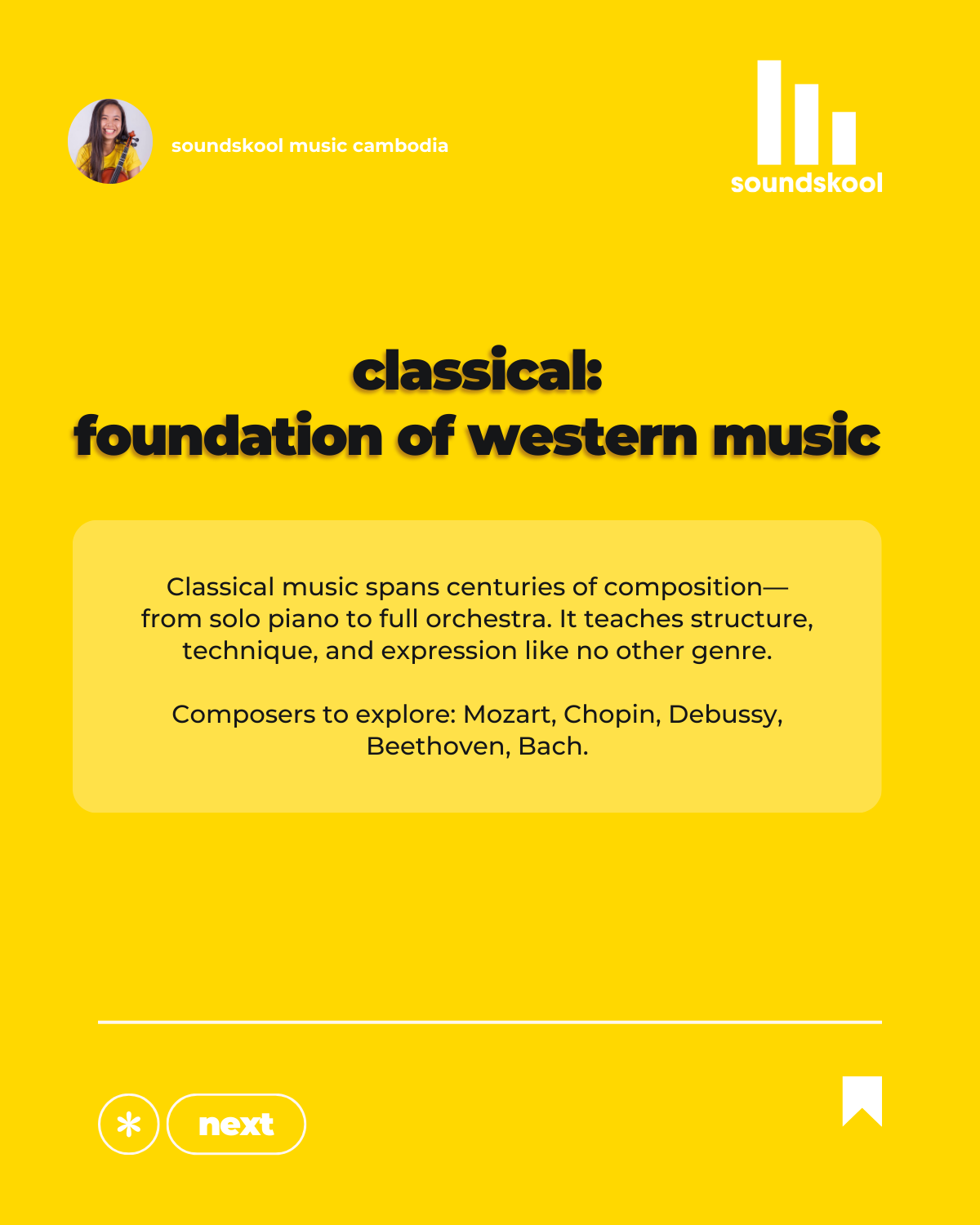
Classical music is one of the main foundations of music teaching, and is sometimes referred to as Western classical music. It matters because it establishes a lot of the basics: reading, touch, phrasing, control, and how musical ideas are put together properly.
Even students who mostly enjoy pop or rock often benefit from some classical study because it sharpens discipline and technique. Think of Bach, Mozart, Beethoven, Chopin, or Debussy. Classical music gives students refinement, and a stronger understanding of musical concepts at a higher level.
Jazz
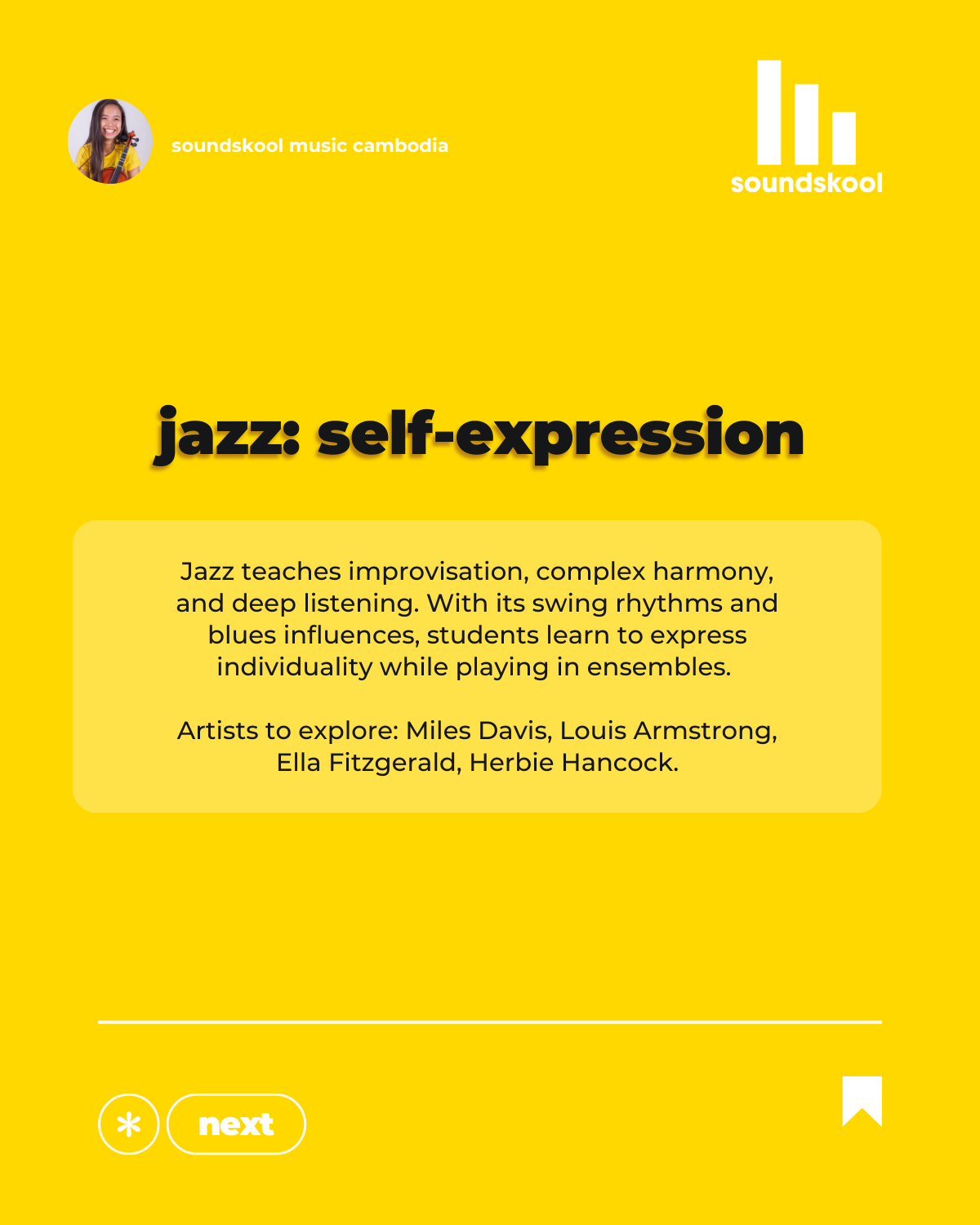
Jazz is about listening, rhythm, harmony, and self-expression. It is built around swing, feel, and improvisation. The rules are looser than in classical music, but the two genres are still closely related.
The big difference is that jazz players are expected to shape the music as they play. They bend phrases, shift timing, and improvise around the tune, which makes the music feel fresh every time. Think of Ella Fitzgerald, Miles Davis, or Louis Armstrong. Jazz trains the ear in a serious way.
Hip-Hop
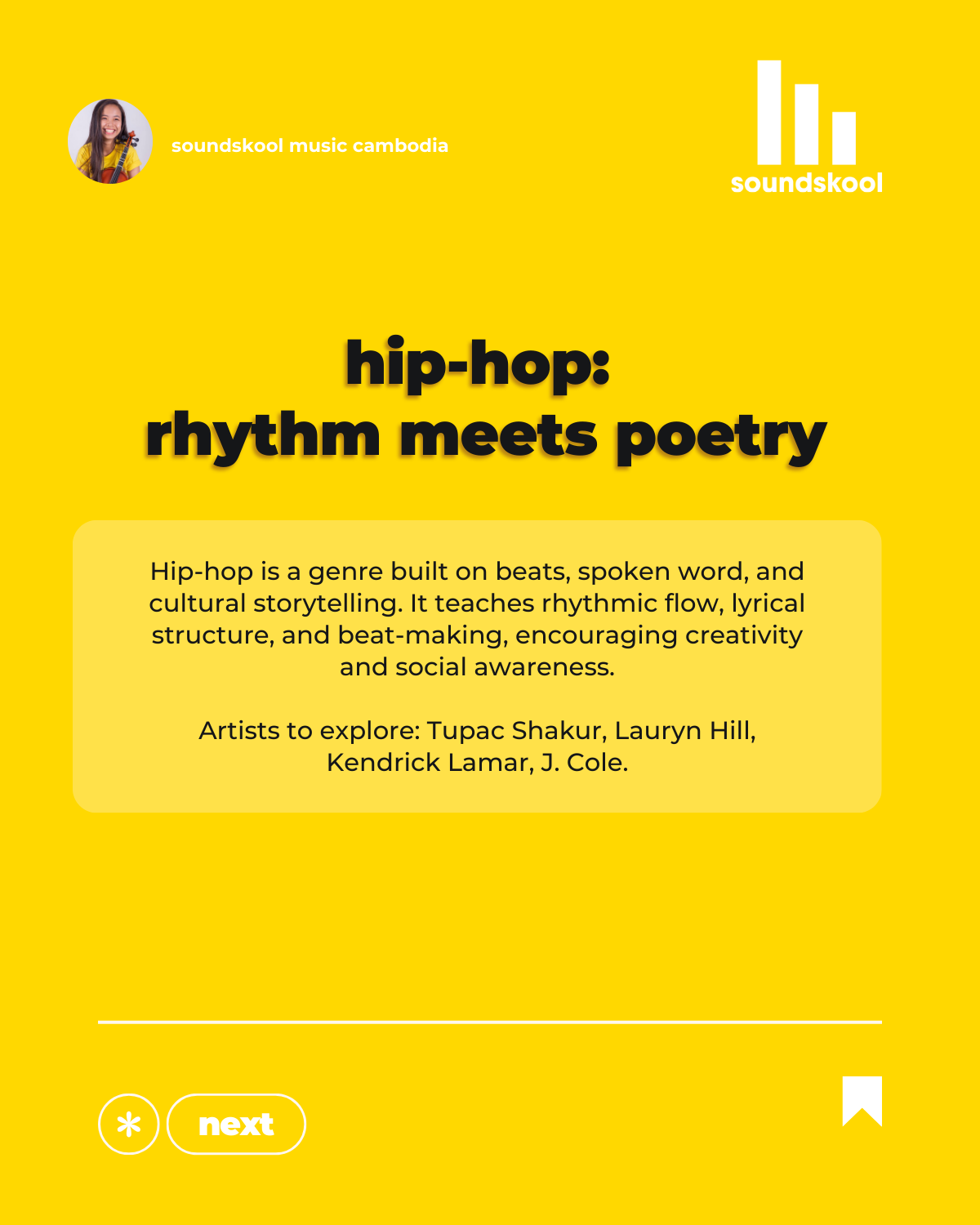
Hip-hop centres on beat, flow, lyric rhythm, production, and cultural storytelling. For many students, it is one of the most immediate ways to understand rhythm because the groove sits right in front of you.
Hip-hop also teaches students how words sit inside a beat, how repetition can build power, and how production choices shape identity. Think of Tupac, Nas, Kendrick Lamar, Lauryn Hill, or J. Cole. It is direct music. If the timing is weak, everyone can hear it straight away.
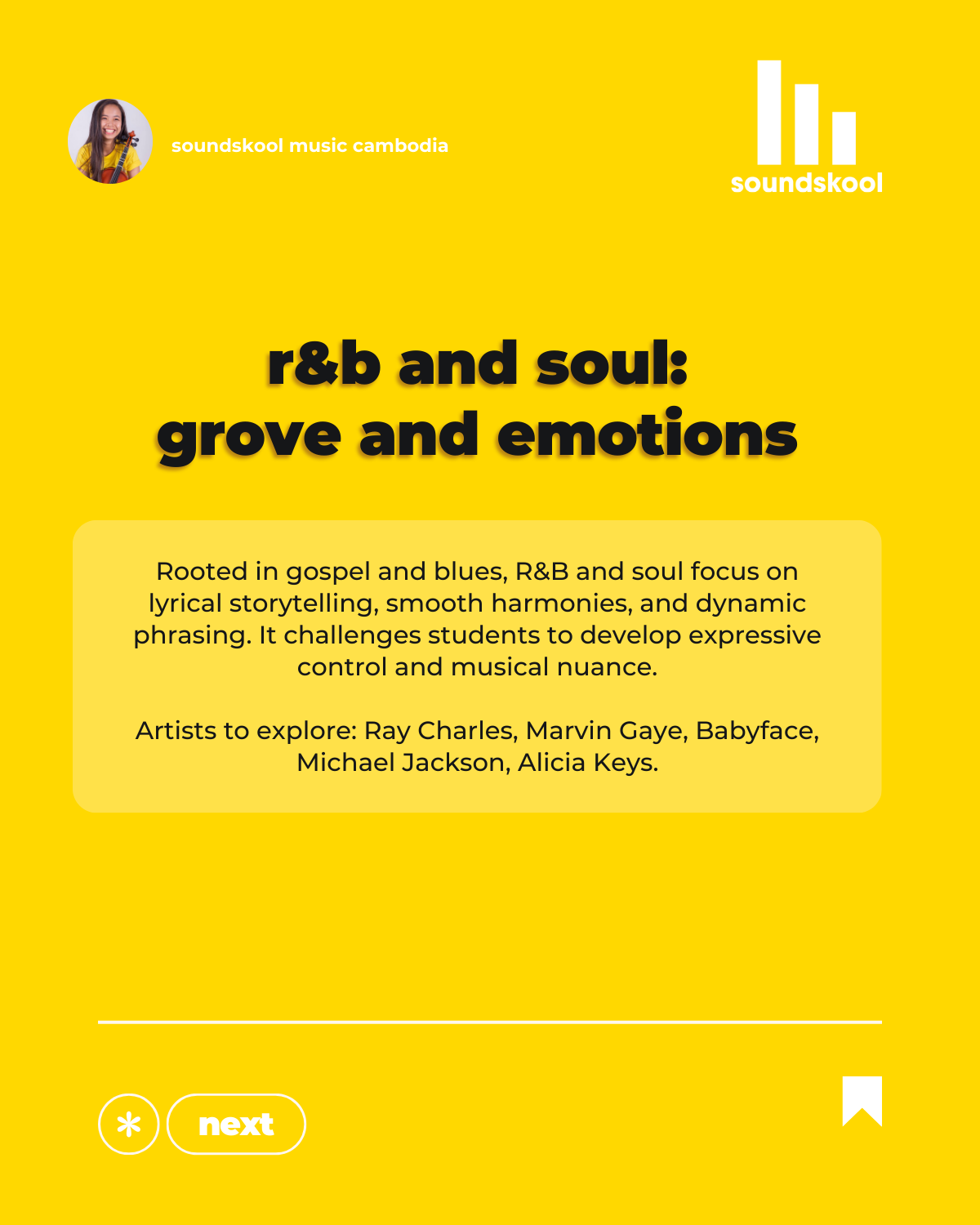
R&B And Soul
R&B and soul are strong training grounds for groove, phrasing, vocal control, and emotional nuance. This is music that rewards feel. A small change in timing, tone, or breath can completely change the mood.
Students learn quickly that expression does not only come from volume. A lot of it lives in control, timing, colour, and restraint. Think of Aretha Franklin, Stevie Wonder, Alicia Keys, Marvin Gaye, or H.E.R. That is why R&B and soul are so good for singers, pianists, and band students alike.
Rock
Rock brings energy, band playing, strong backbeats, riffs, and stage attitude. It is useful for students who want to understand how drums, bass, guitar, keys, and vocals lock together when the music needs drive.
Rock also teaches students a lot about arrangement. Think of The Beatles, Queen, Nirvana, AC/DC, or Foo Fighters. A good rock band knows when to push, when to strip the sound back, and how to support a strong lead line without getting in the way. It is simple on the surface, but it teaches a lot.

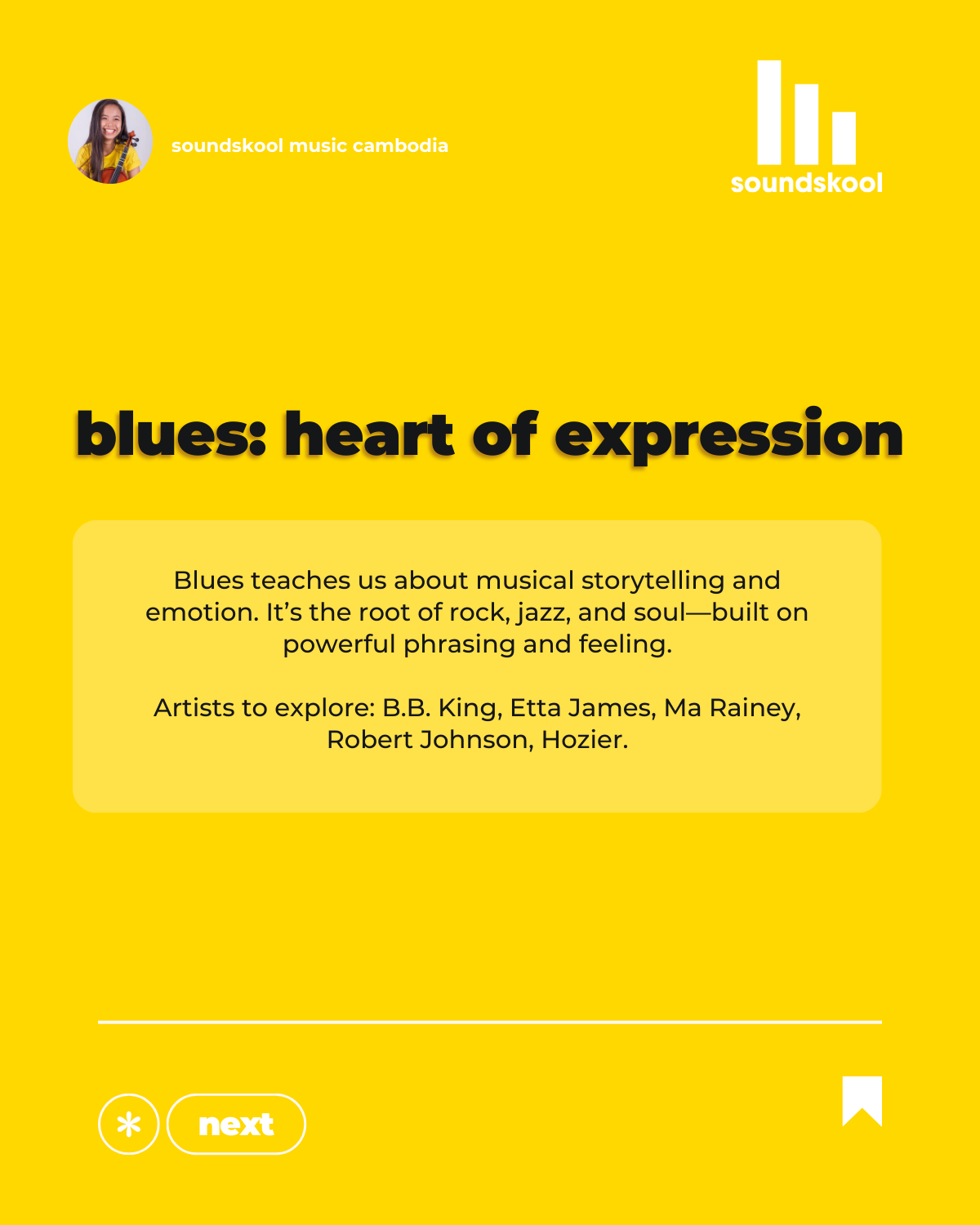
Blues
Blues sits underneath a lot of modern popular music. It began in African American communities in the southern United States, and its influence runs through rock, jazz, soul, R&B, and even pop. Students may not realise it at first, but they are hearing the blues all the time.
Blues is important because it teaches phrasing, call-and-response, emotional storytelling, and how to make simple material feel meaningful. Think of B.B. King, Muddy Waters, Robert Johnson, Etta James, or Eric Clapton in his blues work. For many students, blues is the first style that really shows them how feeling works in music.
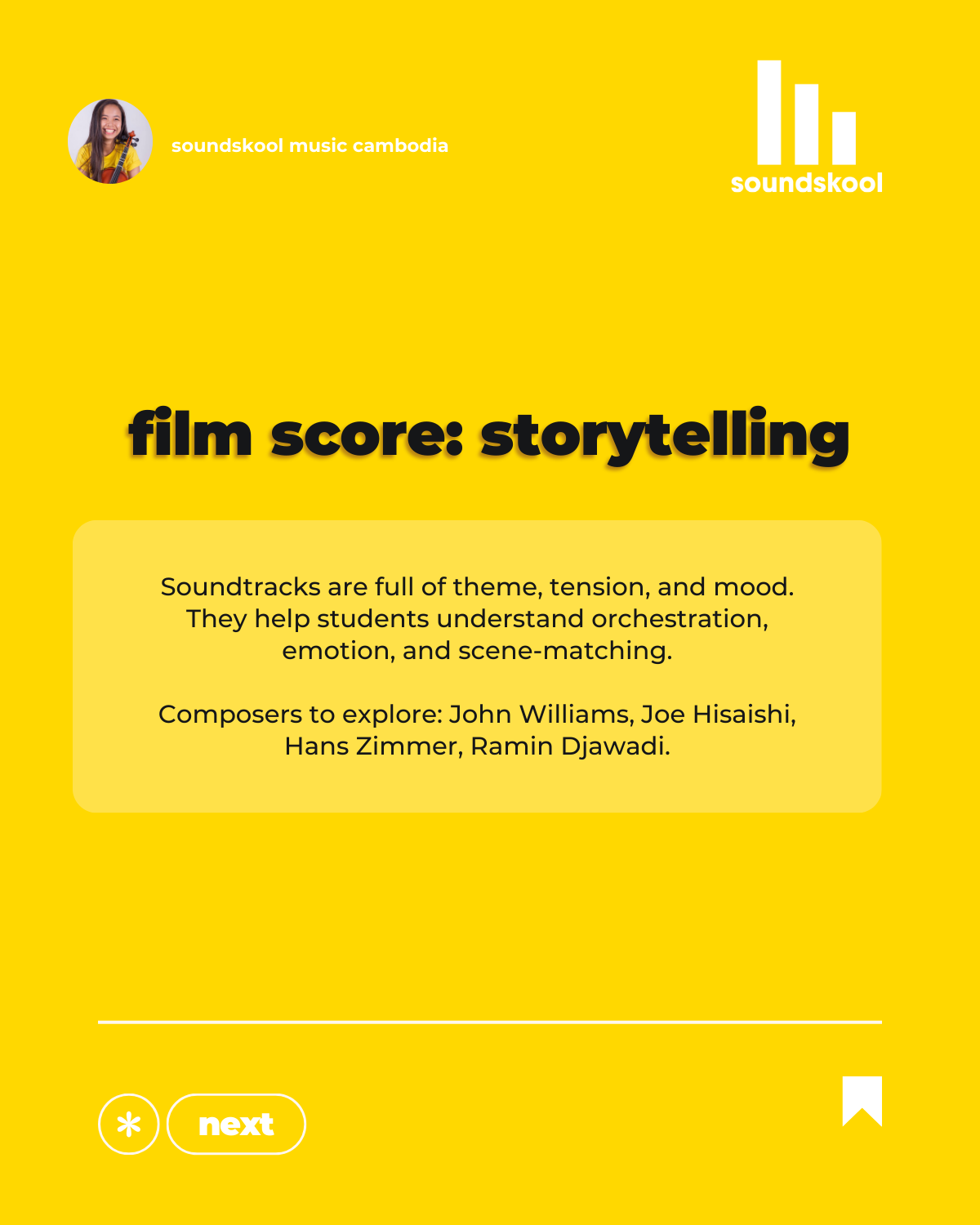
Film Score
Film score music is all about mood, pacing, colour, and story. Students who are drawn to film music usually start noticing how a chord, a rhythm, or even one note can completely change the feeling of a scene.
Think of John Williams, Hans Zimmer, Joe Hisaishi, Ennio Morricone, or Howard Shore. Film score is one of the clearest ways to understand that music has a job to do. Sometimes it needs to build suspense. Sometimes it needs to stay out of the way. Sometimes it needs to break your heart in twenty seconds. That is serious composing.
Electronic
Electronic music introduces students to sound design, beat layers, loops, production choices, and digital tools. For some students, this is the genre that makes them realise music is not only about playing notes. It is also about building sound.
Electronic music can be minimal or huge, clean or dirty, club-focused or cinematic. Think of Daft Punk, Aphex Twin, Skrillex, Deadmau5, or Kraftwerk. That range is part of what makes it so interesting. It teaches students to think about texture, timing, space, and production in a different way.

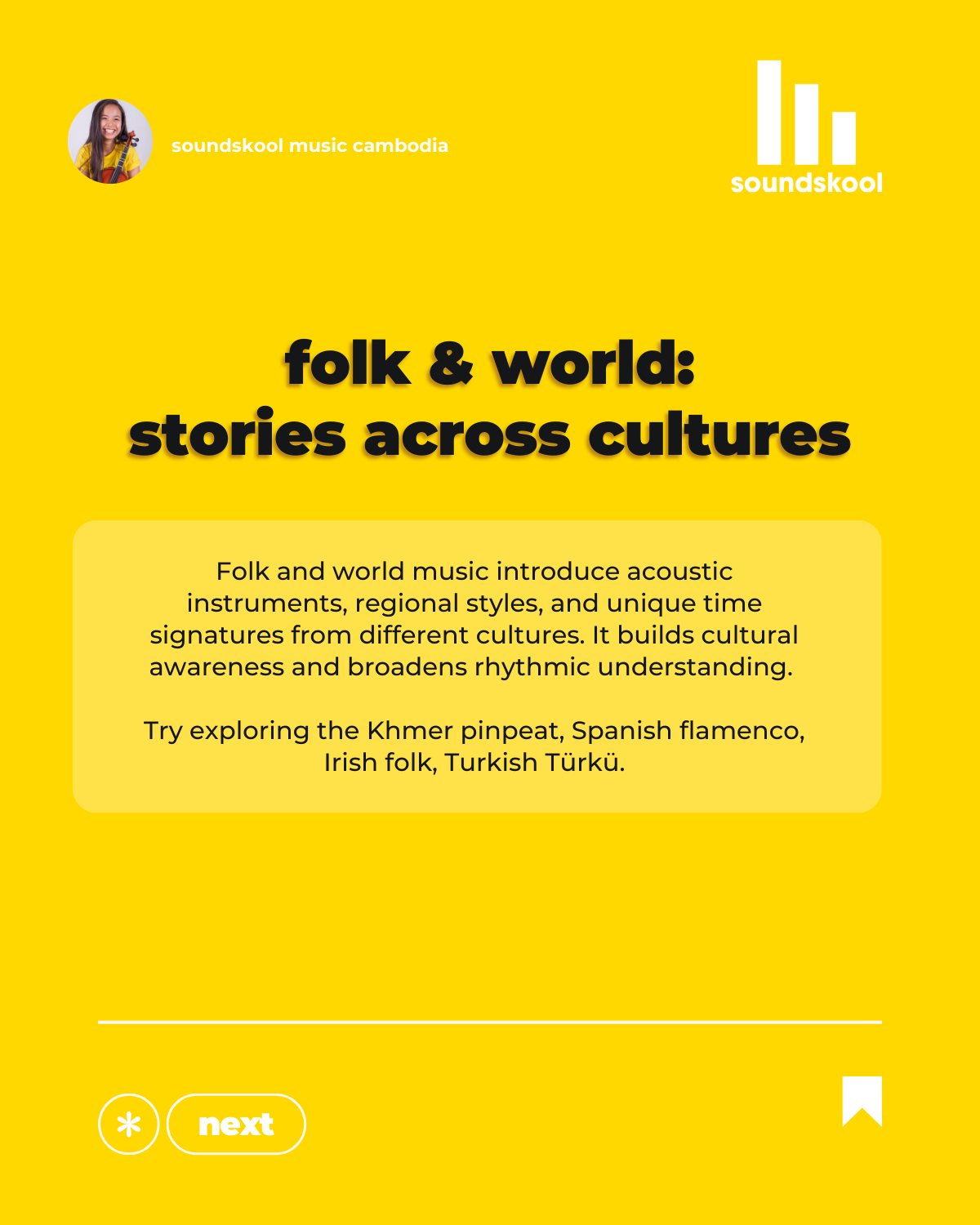
Folk And World Music
Folk and world music widen a student's ear very quickly. They bring regional rhythms, different scales, unusual instruments, and cultural histories that do not always follow the same patterns students hear in Western pop or classical music.
Think of Bob Dylan, Ali Farka Toure, Cesaria Evora, Ravi Shankar, or Buena Vista Social Club. That matters. Students should hear early on that music does not begin and end with one Western playlist. The more styles they hear, the less narrow their musical taste becomes, and the more open they are as players and listeners.
Why Genre Study Matters
The more styles a student explores, the more flexible they become. Genre study improves listening, repertoire choice, stage awareness, arrangement, and taste. It also gives teachers and students a clearer way to talk about the sound they are aiming for.
In simple terms, the more music you understand, the better musician you become.

Related Reading
Why Music Theory Matters
What the Vocalist Does in a Band
How do RSL Exams Work?
External Reading
Quick Takeaway
- Music genres are different types of music. Each genre has its own sound
- History
- Attitude