
Who This Is For
What You'll Learn
- Performance etiquette sounds formal
- But for students it is mostly about calm
- Respect
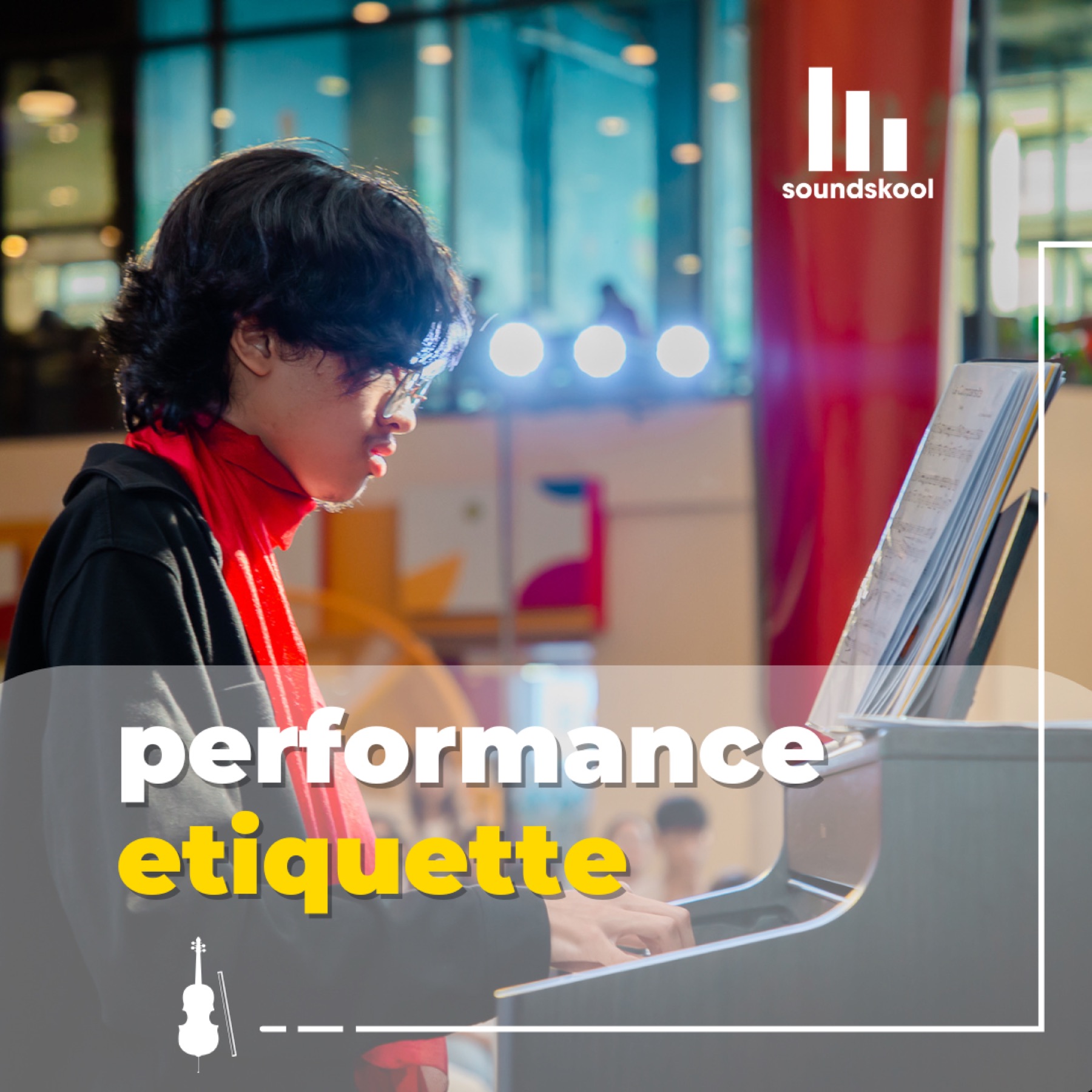
Performance etiquette sounds formal, but for students it is mostly about calm, respect, and knowing what to do before, during, and after they play.
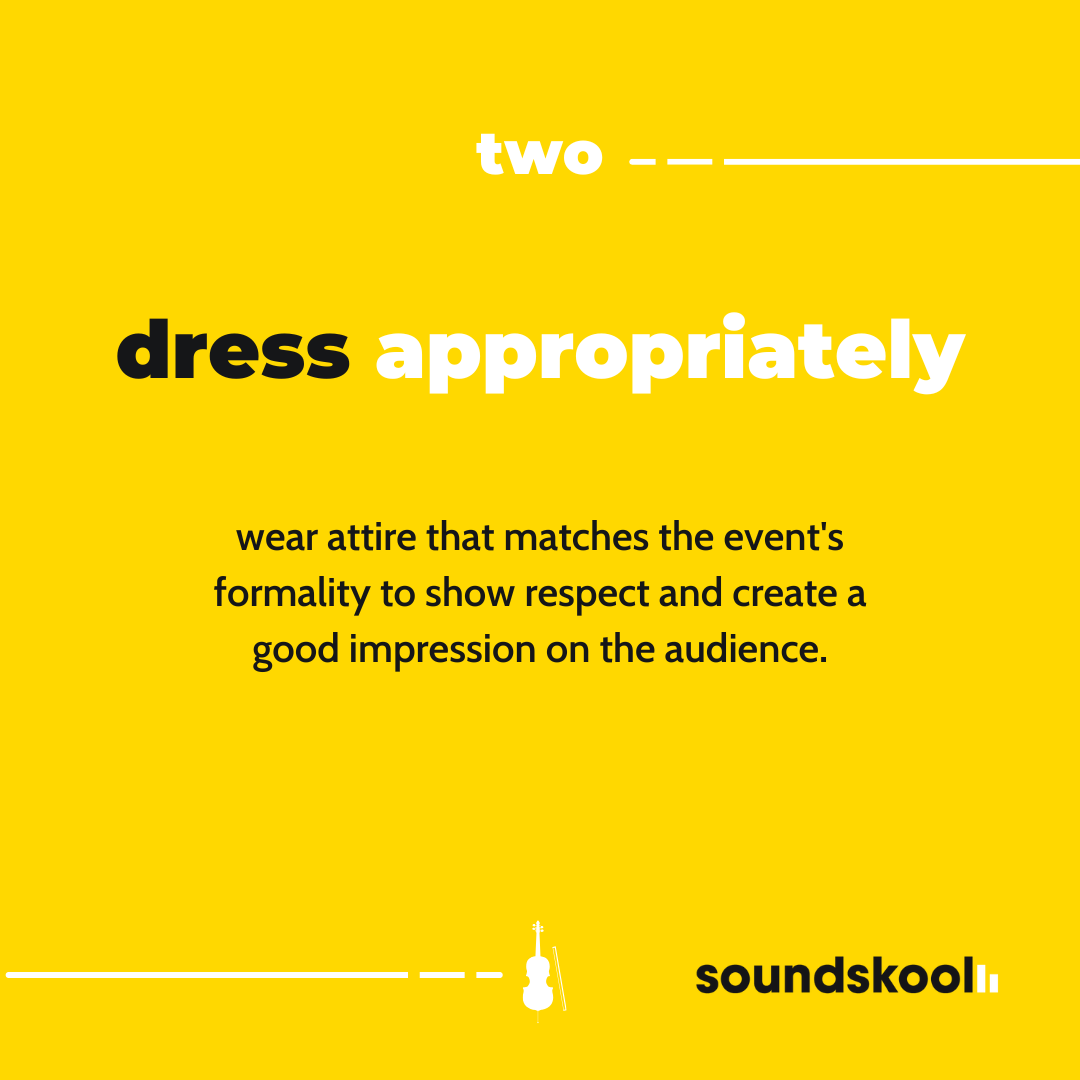
At Soundskool, these details matter because they help students feel more settled on stage. Families notice the music first, but teachers also notice how a student walks on, waits, starts, finishes, and listens to others.
What students need to do before they play
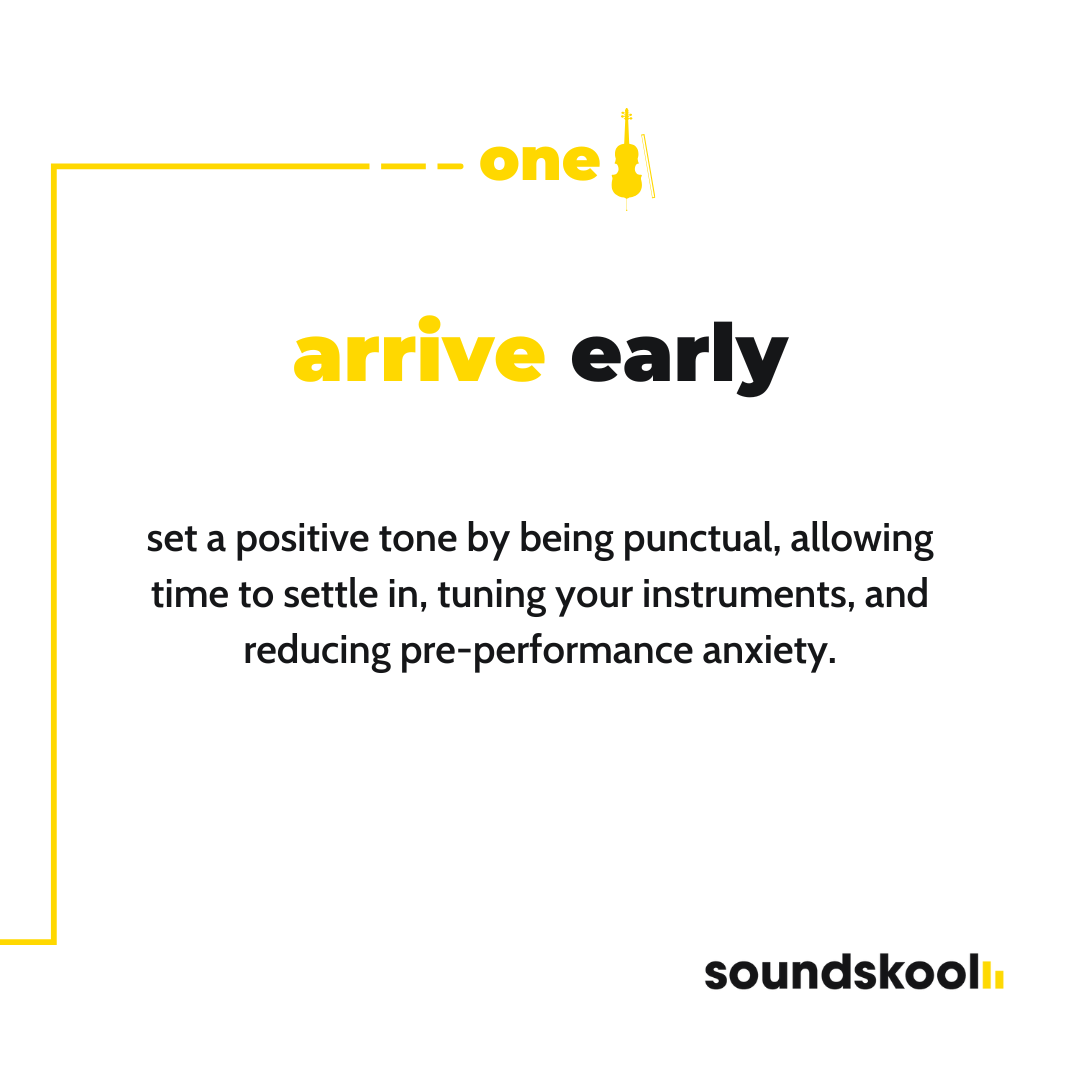
Arrive early enough to settle in. Know the running order. Have the music, sticks, picks, or accessories ready. A lot of stage panic starts before the first note because the student is already rushed.
Student Event Flow
Arrive on time, know the order, and keep instruments and books ready.
Move calmly, adjust the bench or stand properly, and take one second before starting.
Keep going if there is a small mistake. Most audiences notice the recovery more than the slip.
Acknowledge the audience, leave neatly, and become a good listener for the next performer.
What matters on stage
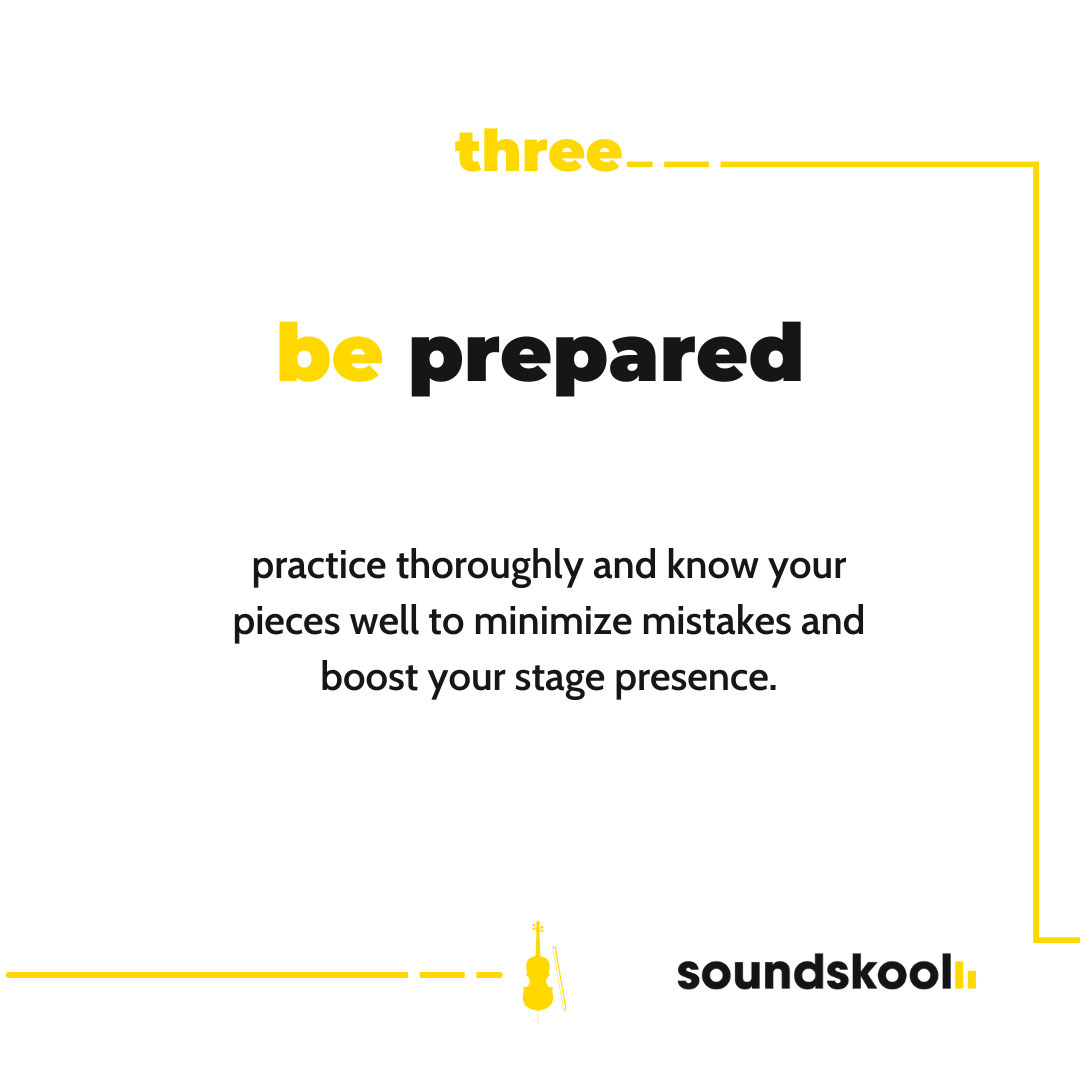
Students do not need to look dramatic. They need to look prepared. A calm walk, a sensible start, and a clear ending already make a performance feel more confident.
If the student needs to say their name or title, it should be short and clear. If they need to adjust the bench or music stand, do it without rushing.
Before, During, And After The Performance
Good etiquette is mostly calm habits repeated at the right time.
Audience behaviour is part of etiquette too
Students should stay seated, avoid talking over other performers, and clap properly. At school events, being a good audience member is part of being a good performer.
What parents can help with
Parents help most by keeping the mood steady. Bring the student early, avoid last-minute instructions, and let the preparation speak for itself.
Quick Takeaway
- Good etiquette starts before the first note.
- Students look more confident when they know the routine around the performance.
- Audience behaviour matters as much as stage behaviour at school events.
- Calm preparation usually does more than last-minute coaching.
Useful Reading Outside Soundskool
- RSL Awards: Graded Music Exams for examples of the kind of structured performance expectations students grow into.
- NHS: Breathing Exercises for Stress for a simple routine students can use before going on stage.