

Who This Is For
What You'll Learn
- A lot of singing problems begin before the note even comes out. If the breath is shallow
- Shoulders lift
- The body tightens
A lot of singing problems begin before the note even comes out. If the breath is shallow, shoulders lift, and the body tightens, the voice usually follows. That is why breathing work shows up so often in good vocal teaching. It is not extra theory. It is part of the instrument.
Students do not need to turn every lesson into a medical diagram. They do need to learn what supported breathing feels like, how to release tension, and when to take a breath in the song instead of snatching one at random.
What Good Breath Support Sounds Like
Supported singing usually sounds steadier, less squeezed, and easier on longer phrases. The voice carries better because the airflow underneath it is more reliable. Students often feel this before they can explain it. The note feels less panicked. The phrase lasts. The ending of the line does not collapse.

What Usually Goes Wrong
The common problems are familiar: chest breathing, a raised chin, locked knees, too much air pushed too fast, and a breath taken far too late. Younger singers often copy what they think singing should look like. Older singers sometimes try to power through with effort instead of support. Both habits can be fixed, but they need attention.
Stand tall without stiffening.
Let the ribs and lower torso expand on the inhale.
Keep shoulders quiet.
Release the air in a controlled stream instead of dumping it at the start.
Why It Matters For Stamina
Students who manage breath better usually sing longer with less fatigue. That matters in choir, band rehearsals, school performances, and exam pieces. It also helps with nerves. When breathing settles, the rest of the body often follows. You can see it in the lesson room: the student stops fighting the phrase.
How To Practise Between Lessons
Keep it simple. Silent low breaths, slow hissing exercises, sustained lip trills, and short phrases sung on one vowel are usually more useful than overcomplicated drills. Five steady minutes done properly will help more than twenty distracted ones.
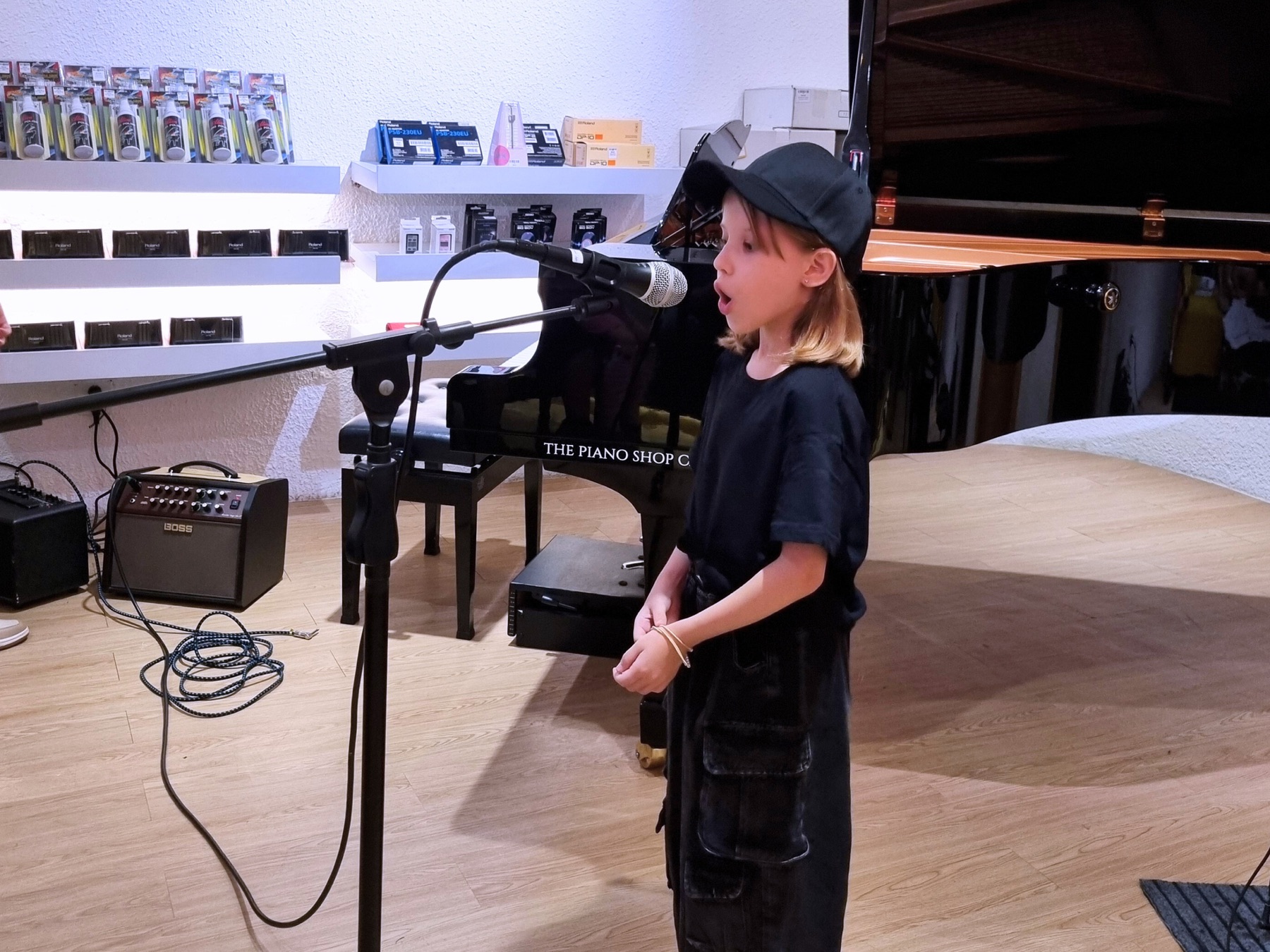
What Parents And Students Should Listen For
Listen for phrase endings that suddenly fade, high notes that tighten, and places where the student gasps in the middle of a thought. Those are often breath clues, not simply pitch problems. A teacher can then decide whether the fix is posture, planning, or support.
Better breathing gives singers more control, steadier phrasing, and less strain. It is one of the most useful habits a vocal student can build early.
Related Reading
Why Singing Is Good for Students
Performing at Soundskool Events
How Students Can Handle Performance Nerves