

Who This Is For
What You'll Learn
- How to warm up
- How to breathe properly
- How to repeat short phrases
Singing practice can become messy very quickly because the instrument is inside the body. Students try the whole song too early, push too much air, tighten the neck, and keep going because there is no keyboard or drum head telling them exactly where things went wrong. The answer is a simpler routine.
1. Start by settling the breath
Do not launch straight into the loud bit of the song. Start with quieter breathing work, gentle airflow, and an organised body. If the shoulders are climbing and the breath is panicked before the first phrase, the rest of the session usually follows the same path.
2. Warm up the sound, not just the confidence
Simple hums, lip trills, sirens, and short vowel work are enough at the start. The point is to get the voice moving without strain. Warm-ups should make the student feel more available, not more impressed with themselves.

3. Practise one phrase at a time
Most vocal problems become clearer when the phrase gets shorter. Work one line. Check the breathing point. Repeat it. Then place it back into the song. Students who always sing the full song rarely fix the weak places properly.
A useful beginner singing routine
- 2 minutes: quiet breathing and release work.
- 3 minutes: gentle warm-ups.
- 5 minutes: one phrase or one chorus section.
- 3 minutes: repeat the hardest line more slowly.
- 2 minutes: sing the section again with the correction in place.
4. Do not force volume
Many beginners think louder means better. It usually means tighter. A clean, steady phrase at a manageable volume is far more useful than a big pushed sound that the student cannot control twice in a row.
5. Record a short section back
Singers often hear themselves differently while they are producing the sound. A short recording can reveal whether the line is sharp, breathy, squeezed, or far more stable than the student expected. One honest recording does more than ten vague guesses.
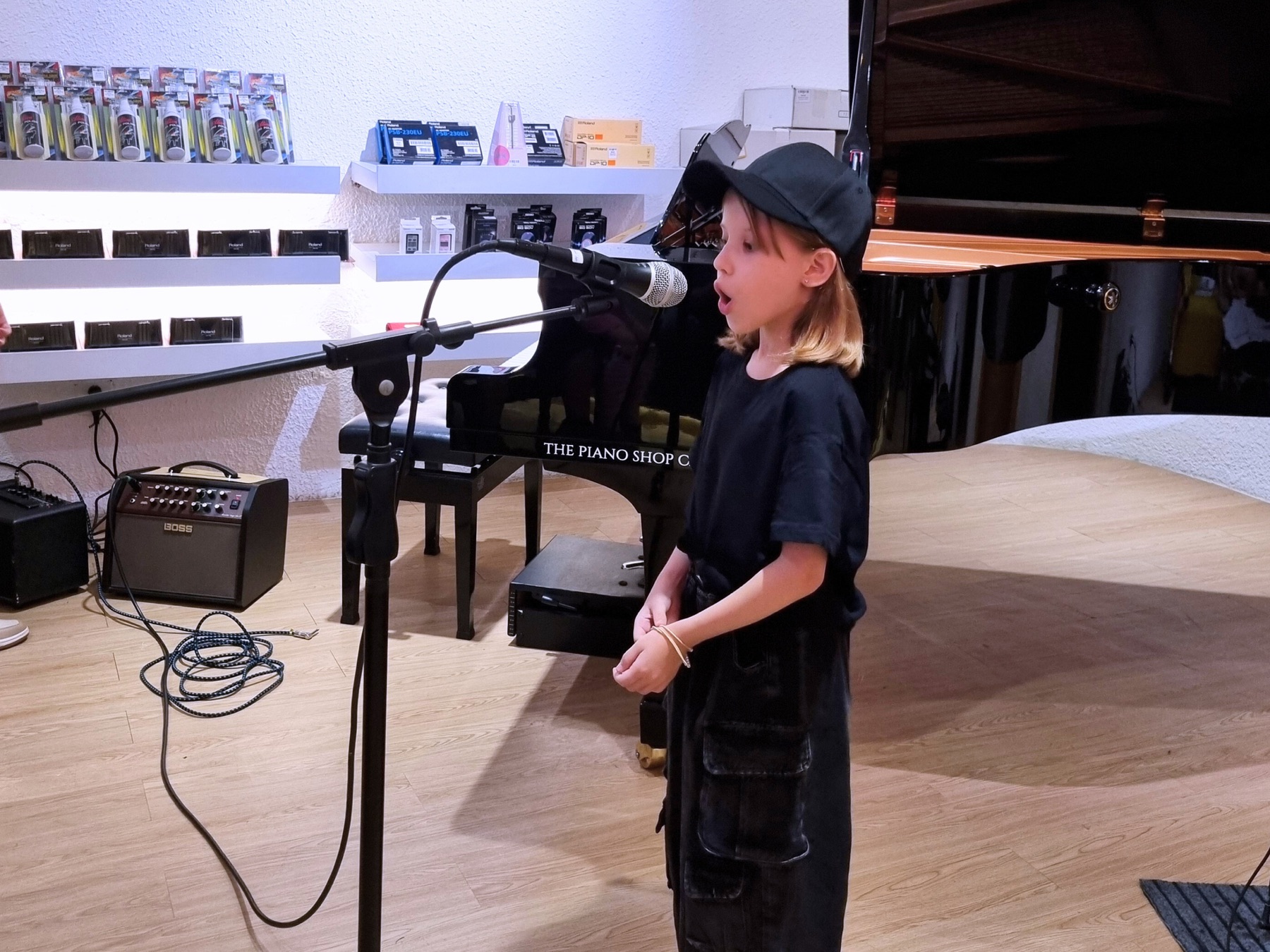
What teachers usually listen for
We listen for phrase endings, breath timing, tension in the onset, and whether the student can repeat the same line with a similar sound twice. Vocal progress often hides in those details before it becomes obvious in the full song.
Related reading
- Beginner Singing Video Guide
- Breathing Basics for Singers
- How Students Can Handle Performance Nerves
Useful Reading Outside Soundskool
- NIDCD: Your Voice for basic voice-health orientation.
- RSL Awards for performance pathways where vocal routine and stamina matter.
If singing practice feels forced or vague, the next useful step is a shorter routine with better breath planning and smaller phrases.