
Who This Is For
What You'll Learn
- Group classes work for a reason. Students learn the music
- Of course
- But they also learn how to listen
Group classes work for a reason. Students learn the music, of course, but they also learn how to listen, wait, enter together, recover after mistakes, and keep going when other people are depending on them. Those are musical skills and real-life skills at the same time.
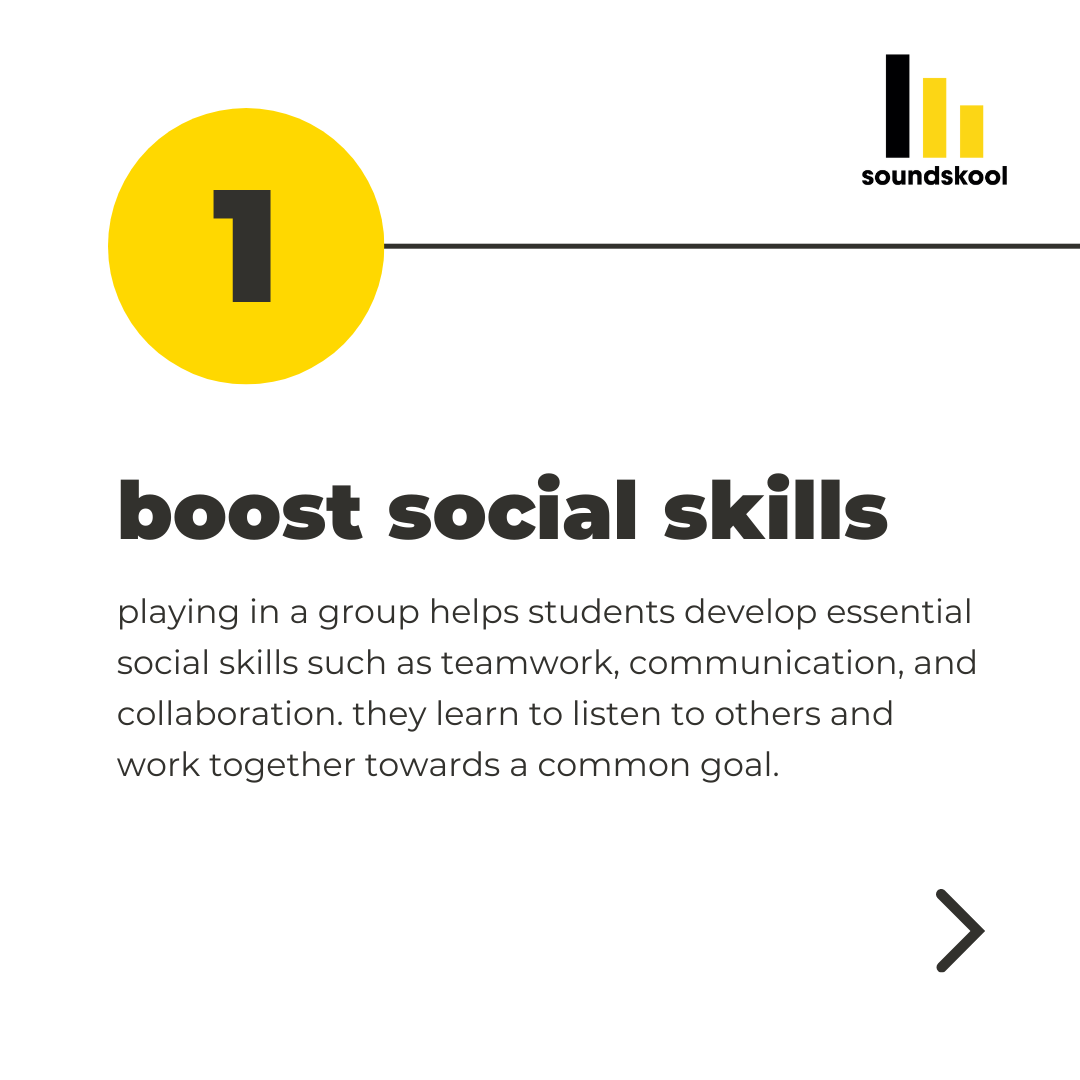
At Soundskool, group learning is often where shy students start speaking up and confident students learn to leave space. That balance matters. A group room teaches habits that a one-to-one lesson cannot always create on its own.
What Students Build In A Group
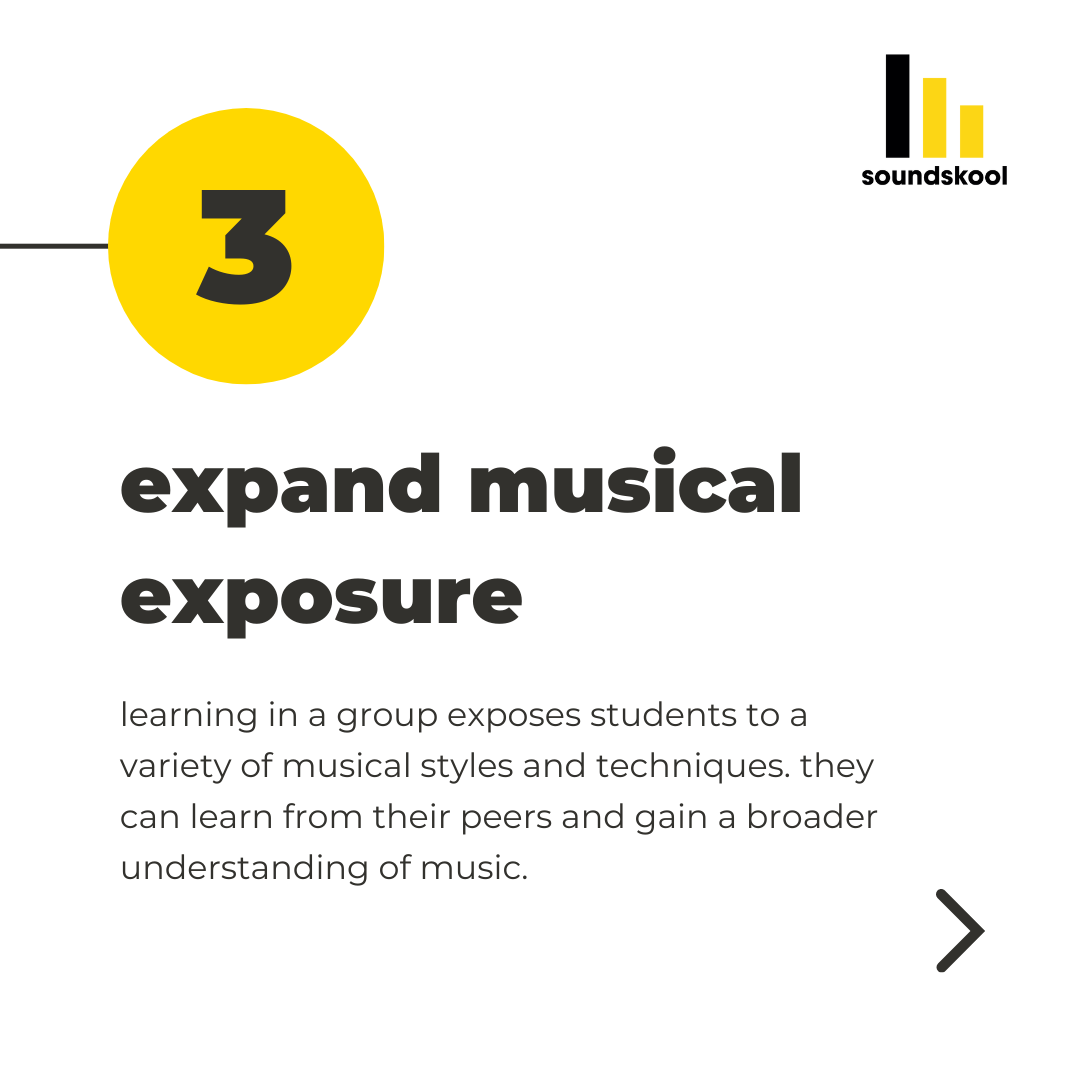
They learn pulse, awareness, turn-taking, cue-following, and how to stay with the room. They also hear more variety. When one student solves a problem, the others usually learn from it as well. That makes the class feel active instead of private work done in public.
Starting and stopping together.
Listening across the room instead of only to themselves.
Keeping the pulse while others play different parts.
Handling small performance pressure in a safe setting.
Why It Helps Confidence
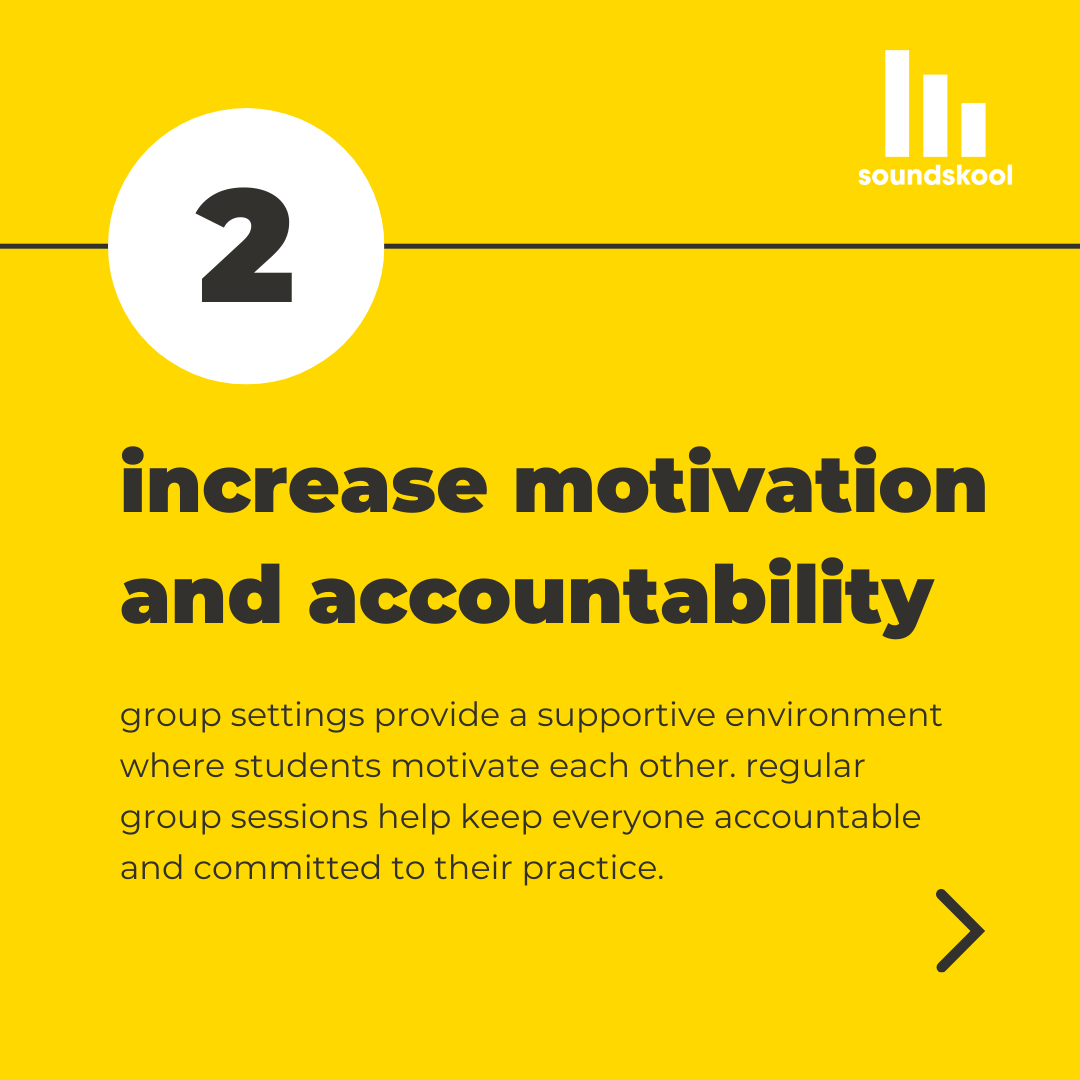
Some students find group classes less intimidating than being the only person in the room. Others enjoy the energy and become more motivated because the class has momentum. Either way, students often practise better when they know they are turning up to contribute, not only to receive instructions.
What Students Learn In The Room
A group class teaches students to notice the room around them, not only their own part.
It Also Prepares Students For Real Music-Making
Very few musicians stay in a bubble forever. Choirs, bands, duets, school shows, camps, and exam ensembles all require cooperation. Group learning gives students a place to build those instincts early, while teachers are there to guide the process.
Who Group Learning Suits Best
It is a strong fit for beginners who benefit from energy and structure, students who enjoy peer motivation, and learners who want to build ensemble confidence alongside technique. Some students do best with a mix of private and group lessons. That is often the sweet spot.
Group classes teach students how to play with other people, listen properly, and stay steady inside a shared musical moment. That is why they work so well.
Related Reading
What the Vocalist Does in a Band
Performing at Soundskool Events
How to Make Practice Time Count